
Is It Worth Building a PC Without a Discrete Graphics Card in 2026?
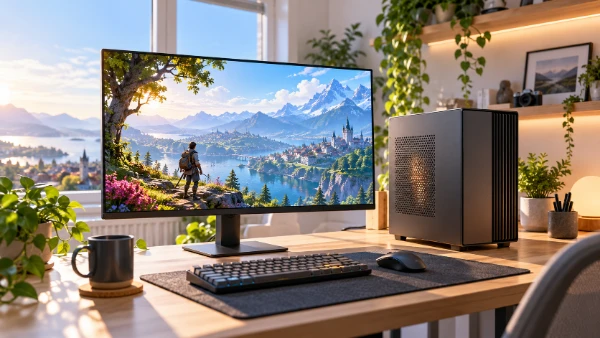
Building a desktop PC without a dedicated graphics card no longer means accepting a machine suited only to web browsing and office work. By 2026, integrated graphics have become capable enough to handle everyday computing, high-resolution video, creative applications and a surprisingly broad range of games. Processors such as the AMD Ryzen 7 8700G and Ryzen 7 8705G combine capable CPU cores with Radeon 780M graphics, while less expensive chips such as the Ryzen 5 8600G use Radeon 760M graphics. This makes a GPU-free build a realistic option for buyers who value lower cost, lower power consumption and a simpler PC, although the decision still depends heavily on the games and applications the computer is expected to run.
What Integrated Graphics Can Actually Do in 2026
The biggest change is that integrated graphics are no longer limited to displaying the Windows desktop and playing video. A modern graphics processor built into the CPU can comfortably handle general home and office tasks, several monitors, video streaming and hardware-accelerated media playback. For a PC used mainly for Microsoft Office, browsers, online meetings, studying, coding or media consumption, buying a separate graphics card simply to obtain basic display performance is often unnecessary.
AMD’s Ryzen 8000G desktop processors illustrate how far this category has progressed. The Ryzen 7 8700G combines eight CPU cores and 16 threads with Radeon 780M graphics containing 12 graphics cores, while the Ryzen 5 8600G has six CPU cores, 12 threads and Radeon 760M graphics with eight graphics cores. AMD also introduced the Ryzen 7 8705G in late 2025, retaining the eight-core CPU configuration and Radeon 780M graphics. These processors use DDR5 memory, which is particularly important because integrated graphics share the computer’s system memory instead of having dedicated VRAM.
Intel’s recent desktop processors also include integrated graphics on many models, although buyers need to check the exact processor rather than assuming every chip has them. For example, the 2026 Core Ultra 5 250K Plus includes Intel Graphics with four Xe cores and supports modern display and media features, including AV1 hardware encoding and decoding. Intel models carrying an F or KF suffix are an important exception in many product families because those versions may have their integrated graphics disabled. Anyone deliberately building a PC without a graphics card should therefore confirm the CPU specification before ordering parts.
Gaming Is Possible, but Expectations Matter
Gaming is where a modern integrated GPU differs most clearly from older generations. Radeon 780M graphics can run many popular competitive and less demanding games at 1080p, particularly when medium or low visual settings are used. Games such as Dota 2 and other esports-focused titles are far more realistic targets than they once were on integrated graphics. Independent testing of the Ryzen 7 8700G has shown that its integrated GPU can provide usable 1080p gaming in a selection of modern titles, although performance varies greatly from one game to another.
More demanding games require compromises. Recent graphically intensive releases may need lower detail settings, reduced rendering resolution or an upscaling feature to maintain a comfortable frame rate. Technologies such as AMD Radeon Super Resolution can help by rendering a game at a lower internal resolution and scaling the image to the monitor’s native resolution. This can improve performance, but it cannot create the same image quality and consistency that a substantially faster dedicated graphics card provides.
This distinction makes integrated graphics particularly suitable for casual players, esports fans and people who play older or relatively lightweight games. Someone primarily interested in games such as competitive multiplayer titles, indie releases, strategy games or an existing back catalogue may find that a dedicated graphics card adds unnecessary cost. A buyer planning to play every major new AAA release at high settings, high frame rates or 1440p and 4K resolutions has a very different requirement and should still budget for a discrete GPU.
Why a PC Without a Dedicated GPU Can Make Sense
Cost is one of the clearest reasons to leave out a graphics card. A discrete GPU can account for a substantial part of the total price of a gaming PC, and removing it can free money for components that affect everyday usability more consistently. A larger SSD, 32 GB of memory, a better monitor or a higher-quality power supply may provide more practical value to someone who does not need substantial graphics performance. An APU-style processor also avoids paying separately for CPU and GPU hardware when a single component can satisfy both requirements.
A simpler build also tends to consume less electricity and produce less heat. Modern graphics cards can draw significant power under load, whereas an integrated GPU operates within the processor’s overall power envelope. AMD’s Ryzen 7 8700G, Ryzen 5 8600G and related 8000G desktop processors have a default thermal design power of 65 watts. Actual whole-system consumption depends on the motherboard, memory, storage, workload and power settings, but a machine without a discrete GPU can generally be built around a more modest cooling and power arrangement.
Physical size is another advantage. Removing a full-size graphics card makes compact computers easier to design because the case does not need to accommodate a long expansion card or provide large amounts of airflow around it. This can be useful for a living-room PC, study computer, small home workstation or compact desktop where quiet operation and a tidy footprint matter more than maximum gaming performance. Fewer major components also mean fewer fans and fewer potential sources of noise.
The Right Memory Matters More Than Many Buyers Expect
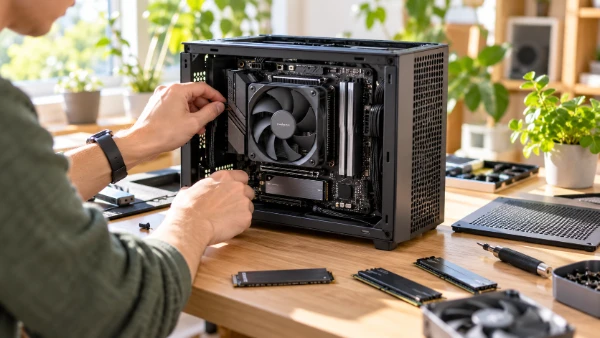
There is one important difference between integrated and dedicated graphics: an integrated GPU does not normally have its own pool of high-speed graphics memory. It relies on the PC’s system RAM. That means memory configuration can have a noticeable effect on graphics performance, particularly on processors with comparatively powerful integrated GPUs such as the Radeon 780M. A badly configured memory setup can prevent the graphics section of the processor from performing as well as expected.
For this reason, a two-module memory kit is generally preferable to a single memory module when building a gaming-oriented PC around integrated graphics. Using two suitable modules allows the processor to take advantage of the available memory channels and gives the GPU more effective bandwidth. A balanced 32 GB configuration is particularly practical for a new 2026 build because the operating system, applications and integrated graphics all draw from the same physical memory pool.
Memory speed also matters, although there is little reason for an ordinary buyer to turn the build into an extreme tuning project. Ryzen 8000G processors use DDR5, and a properly configured DDR5 kit is enough to obtain the benefits these processors were designed around. The practical priority should be compatible memory, two-module operation and a stable profile supported by the motherboard rather than pursuing the highest advertised frequency at any cost.
Where Integrated Graphics Still Fall Short
A modern integrated GPU is capable, but it does not eliminate the need for discrete graphics. Dedicated cards still have much greater graphics processing resources and their own high-bandwidth video memory. This difference becomes obvious in demanding AAA games, high-resolution gaming and workloads that place sustained pressure on the GPU. Visual settings such as advanced lighting, detailed shadows, high-resolution textures and ray tracing can quickly move beyond what an integrated solution can handle comfortably.
Professional workloads can create similar limitations. Basic photo editing, ordinary video work and many creative applications can run perfectly well without a separate graphics card, but GPU-heavy rendering, complex 3D modelling, large visual effects projects and some professional AI workloads can benefit enormously from dedicated graphics hardware. Software requirements also matter: certain applications are optimised for particular GPU technologies, so a computer intended for professional use should be specified around the actual software rather than a general assumption that integrated graphics will be sufficient.
Another consideration is long-term gaming performance. A capable integrated GPU may meet someone’s requirements today, but new games tend to become more demanding over time. A buyer who already knows that high-end gaming is the eventual goal should make sure the rest of the computer leaves a sensible upgrade route. That means choosing a case with room for a graphics card, a motherboard with the appropriate expansion slot and a power supply that can support the intended future upgrade.
Who Should Build a GPU-Free PC in 2026?
A PC without a dedicated graphics card makes the most sense when gaming is secondary rather than the machine’s main purpose. It is a strong fit for office work, home computing, education, programming, media playback and general productivity, with the added ability to play many esports, indie and older games. It can also suit a first-time builder who wants a functional computer immediately and intends to add a graphics card later when more performance is required or the budget allows.
For a desktop that will actually rely on integrated graphics for gaming, AMD’s G-series processors remain particularly relevant because models such as the Ryzen 7 8700G, Ryzen 7 8705G and Ryzen 5 8600G combine ordinary desktop CPU performance with substantially more capable integrated graphics than processors designed mainly to provide basic display output. The 8700G and 8705G are the stronger options with Radeon 780M graphics, while the 8600G and its Radeon 760M can make sense when a lower overall build cost is more important.
So, in 2026, leaving a discrete graphics card out of a PC is no longer merely a temporary budget compromise. It can be a deliberate and sensible design choice when the computer is intended for everyday work, media and moderate gaming. Modern integrated graphics cannot replace a proper graphics card for demanding high-resolution gaming or GPU-intensive professional work, but they now cover enough real-world tasks that many users can build a complete desktop, use it comfortably from day one and add a dedicated GPU only if their requirements eventually justify the extra cost.
Popular topics
-
 What happened to Flash technology?
This technology emerged back in the 90s and was a …
-
 Smartphone as a Work Tool: The Best Mobile Apps for Produ...
In today’s business environment, smartphones have evolved into indispensable work …
-
 The Future of HTML and CSS Validation: 2025 Standards in ...
In early 2025, HTML and CSS validation has undergone a …
-
 Mobile Technologies in Online Casinos: Games on the Go
Online casinos have evolved significantly over the past decade, largely …
-
 What is SEMrush
In today’s market there are a lot of tools that …