
eSIM for Work and Travel: Setting Up a Second Number, Backup Access, and Protecting Your 2FA
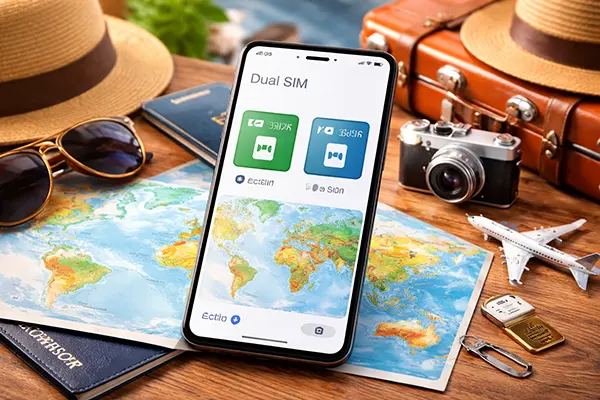
eSIM technology has moved from being a niche feature to a practical tool for professionals, frequent travellers, and anyone who needs reliable mobile access. In 2026, most modern smartphones support eSIM alongside a physical SIM, allowing users to manage multiple numbers without swapping cards. This flexibility is useful not only for separating work and personal communication but also for maintaining connectivity abroad and ensuring secure access to accounts protected by two-factor authentication.
How eSIM Works and Why It Matters for Everyday Use
An eSIM is a digital SIM embedded directly into a smartphone or connected device. Instead of inserting a plastic card, users download a mobile plan by scanning a QR code or activating it through an operator’s app. This approach simplifies switching between carriers and allows several profiles to be stored on one device, although typically only one or two can be active at the same time depending on the model.
In practical terms, eSIM enables a second number without carrying an additional phone. Many professionals use one profile for business calls and another for personal use, which helps keep communication organised. Travellers benefit even more: instead of buying a local SIM at the airport, they can activate a regional or global data plan in advance and connect immediately upon arrival.
Another important advantage is flexibility. If a network has poor coverage in a specific area, switching to another operator can take minutes rather than hours. This becomes particularly valuable in remote regions or during business trips where stable connectivity is essential for messaging, navigation, and secure logins.
Devices, Compatibility, and Real-World Limitations
As of 2026, most flagship smartphones from Apple, Samsung, Google, and several other manufacturers support eSIM. However, compatibility still varies by region and model. Some devices allow dual active eSIM profiles, while others require switching between them manually. Checking device specifications before relying on eSIM is still necessary.
Network support is another factor. While eSIM is widely available across Europe, North America, and parts of Asia, coverage can be inconsistent in smaller markets. International eSIM providers offer global plans, but these may come with higher data costs or reduced speeds compared to local operators.
There are also practical limits to consider. Not all services fully recognise secondary numbers, especially older banking systems or regional apps. In addition, transferring an eSIM profile between devices may require operator approval or a new activation code, which can slow things down if not planned in advance.
Setting Up a Second Number and Backup Connectivity
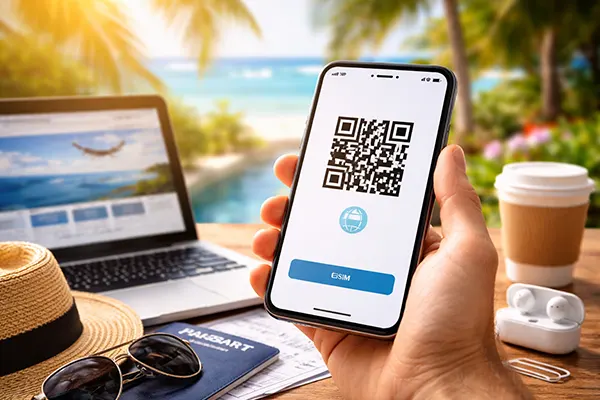
Configuring a second number with eSIM is straightforward but should be approached methodically. After purchasing a plan from a carrier or global provider, users typically receive a QR code. Scanning it through the phone’s network settings installs the new profile, which can then be labelled and prioritised for calls, messages, or data.
For work purposes, it is sensible to assign the secondary number specifically for business contacts and apps. This avoids mixing personal and professional communication and reduces the risk of missed messages. Many smartphones allow you to choose which number is used by default and even assign specific contacts to a particular line.
Backup connectivity is another strong use case. By installing a second data plan—either from a different operator or an international provider—you can switch networks if the primary one fails. This redundancy is particularly useful during travel, conferences, or remote work where uninterrupted internet access is critical.
Best Practices for Travel and Remote Work
Before travelling, it is advisable to install and test the eSIM profile while still connected to a stable network. This ensures that activation works correctly and avoids troubleshooting in unfamiliar environments. Keeping a screenshot or printed copy of the QR code can also help in case reinstallation is required.
When abroad, selecting the correct data profile is essential. Some devices automatically switch between networks, but manual control often provides better results. Choosing the strongest available network can improve speed and reliability, especially in areas with mixed coverage.
It is also worth monitoring data usage. International eSIM plans may include limited allowances, and exceeding them can lead to reduced speeds or additional charges. Using Wi-Fi where available and enabling data-saving features can help extend the plan’s lifespan.
Protecting 2FA and Avoiding Security Pitfalls
One of the most overlooked aspects of using multiple SIM profiles is its impact on two-factor authentication. Many services rely on SMS-based codes sent to a registered number. If that number becomes inactive or inaccessible, account recovery can become complicated or even impossible.
To avoid this, it is important to keep the primary number—especially the one linked to banking, email, and authentication services—active at all times. Even when using a secondary eSIM for data or travel, the original number should remain available for receiving verification codes.
Where possible, switching from SMS-based 2FA to app-based authentication (such as authenticator apps) is a more secure option. These apps generate codes locally on the device and do not depend on mobile network availability, reducing the risk of losing access during travel or network issues.
Practical Security Checklist for eSIM Users
Start by reviewing which accounts are tied to your phone number. Critical services such as email, banking, and cloud storage should be prioritised. Ensure that you have backup authentication methods enabled, including recovery codes stored securely offline.
Next, avoid deleting or deactivating a SIM profile without confirming that it is not used for verification. Even temporary changes can disrupt access if a service attempts to send a code to a number that is no longer active.
Finally, consider the risk of SIM swapping attacks. While eSIM reduces some physical risks, account security still depends on strong passwords and additional verification layers. Using a password manager and enabling multi-factor authentication beyond SMS provides a more resilient setup.
Popular topics
-
 How to Recover Files After Malware Infection: A Step-by-S...
Malware infections can be devastating, especially when they compromise or …
-
 Top 5 popular programs for game developers
In the ever-evolving world of game development, the tools and …
-
 Virtual Machine Guide
A virtual machine (VM) is a software-based emulation of a …
-
 Top 3 Programs for Designers: A Detailed Review
In the ever-evolving world of digital design, the tools and …
-
 How to use Google Keyword Planner
At the moment, there are many resources and tools on …